Posts

How to Choose a Pallet Dispenser: A Complete Buyer’s Guide

In modern manufacturing and logistics environments, efficiency, safety, and consistency are critical. One often-overlooked but essential piece of equipment in automated material handling is the pallet dispenser. Whether you are operating a warehouse, production line, or distribution center, selecting the right pallet dispenser can significantly improve productivity, reduce labor costs, and enhance workplace safety.

This comprehensive guide will walk you through everything you need to know about pallet dispensers—from their functions and types to key selection criteria and practical buying advice.


1. What Is a Pallet Dispenser?

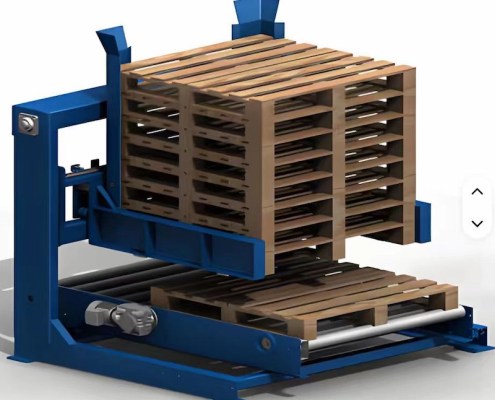
A pallet dispenser is an automated or semi-automated system designed to store, stack, and dispense pallets one at a time for use in production lines, packaging stations, or logistics operations.

Instead of manually handling pallets—which is labor-intensive and potentially hazardous—a pallet dispenser:

  • Automatically separates pallets from a stack
  • Delivers them to a predefined position
  • Ensures consistent pallet supply for downstream processes

Key Functions:

  • Pallet stacking and destacking
  • Controlled pallet release
  • Integration with conveyors or robotic systems
  • Reduction of manual handling

You can check this product : Automatic Pallet Destacker & Stacker 


2. Why Pallet Dispensers Are Important

In today’s highly competitive manufacturing and logistics landscape, companies are under constant pressure to improve efficiency, reduce operational costs, and maintain consistent product quality. While major automation equipment such as robotic palletizers and conveyor systems often receive the most attention, pallet handling remains a fundamental part of the workflow that directly impacts overall performance. This is where pallet dispensers play a critical role.

By automating one of the most repetitive and labor-intensive tasks—pallet handling—pallet dispensers help create a smoother, safer, and more efficient production environment. Below is a more in-depth look at why pallet dispensers are essential in modern operations.


2.1 Improve Operational Efficiency

One of the primary reasons companies invest in pallet dispensers is to significantly improve operational efficiency. In manual environments, workers must constantly move, align, and position pallets, which not only consumes time but also introduces variability into the process.

A pallet dispenser ensures that pallets are delivered automatically, consistently, and at the right time, eliminating delays caused by manual handling. This is especially important in high-speed production lines where even small interruptions can lead to bottlenecks.

Additionally, pallet dispensers:

  • Synchronize pallet supply with production rhythm
  • Reduce idle time for downstream equipment
  • Enable continuous, uninterrupted workflows

As a result, overall system throughput increases, and production targets become easier to achieve.


2.2 Enhance Workplace Safety

Workplace safety is a major concern in industries that rely on manual material handling. Pallets are often heavy, bulky, and difficult to handle, especially when stacked. Repetitive lifting, bending, and carrying can lead to serious injuries such as back strain, muscle fatigue, and long-term musculoskeletal disorders.

By automating pallet handling, pallet dispensers:

  • Eliminate repetitive lifting tasks
  • Reduce the risk of dropped pallets
  • Minimize human interaction with heavy loads

Most modern pallet dispensers are also equipped with safety features such as:

  • Emergency stop systems
  • Protective guarding
  • Anti-drop mechanisms

These features create a safer working environment and help companies comply with occupational health and safety regulations. Over time, this also reduces costs associated with workplace injuries, insurance claims, and lost productivity.


2.3 Reduce Labor Costs

Labor is one of the most significant operational expenses in manufacturing and logistics. Manual pallet handling often requires dedicated personnel, especially in facilities with high throughput.

A pallet dispenser can replace or significantly reduce the need for manual labor in this area by automating repetitive tasks. This allows companies to:

  • Lower direct labor costs
  • Reassign workers to higher-value activities
  • Improve workforce utilization

Moreover, automation reduces dependency on labor availability, which is particularly important in regions facing labor shortages or rising wages.

In many cases, the investment in a pallet dispenser can be recovered quickly through labor savings alone, making it a financially sound decision.


2.4 Ensure Consistency and Precision

Consistency is critical in automated production environments, especially when working with robotic systems or precision equipment. Manual pallet placement often leads to misalignment, inconsistent positioning, or improper orientation, which can disrupt downstream processes.

Pallet dispensers provide:

  • Accurate and repeatable pallet positioning
  • Uniform pallet orientation
  • Controlled release of individual pallets

This level of precision is essential for:

  • Robotic palletizing systems
  • Automated packaging lines
  • Conveyor-based transport systems

By ensuring that every pallet is positioned correctly, pallet dispensers help reduce errors, prevent equipment jams, and improve overall system reliability.


2.5 Support Automation and Smart Manufacturing

As industries move toward Industry 4.0 and smart manufacturing, the demand for fully automated and interconnected systems continues to grow. Pallet dispensers are a key component in this transformation.

They enable seamless integration with:

  • Conveyor systems
  • Robotic arms and palletizers
  • Automated storage and retrieval systems (AS/RS)
  • Warehouse management systems (WMS)

A pallet dispenser machine is often integrated with a roller conveyor line.If you want to learn more about a roller conveyor,pls read this article:Why Roller Conveyors Are Essential in Modern Production

With the addition of sensors and control systems, pallet dispensers can:

  • Communicate with other equipment in real time
  • Adjust operation based on production demand
  • Provide data for monitoring and optimization

This level of connectivity allows companies to build smarter, more responsive production environments that can adapt to changing requirements.


2.6 Optimize Space Utilization

In many facilities, floor space is limited and must be used efficiently. Manual pallet storage and handling often lead to disorganized stacking and wasted space.

Pallet dispensers are designed to:

  • Store pallets in a compact vertical stack
  • Deliver pallets in a controlled manner
  • Reduce clutter in the production area

This helps improve workplace organization and allows for better use of available space, which is particularly valuable in high-density warehouses or production lines.


2.7 Improve Workflow Stability

A stable workflow is essential for maintaining high productivity and avoiding costly disruptions. Manual pallet handling introduces variability due to human factors such as fatigue, inconsistency, and delays.

Pallet dispensers create a more stable and predictable process by:

  • Delivering pallets at consistent intervals
  • Eliminating human-related variability
  • Supporting continuous production flow

This stability is especially important in automated systems, where one disruption can affect the entire production line.


2.8 Enable Scalability and Growth

As businesses grow, their production and logistics requirements become more demanding. Manual processes that once worked efficiently may become bottlenecks.

Pallet dispensers provide a scalable solution by:

  • Supporting higher throughput levels
  • Integrating with expanded automation systems
  • Adapting to increased production demands

Investing in pallet dispensing automation early allows companies to build a strong foundation for future expansion without needing major process redesigns.


3. Types of Pallet Dispensers

Choosing the right type of pallet dispenser starts with understanding the available options.

3.1 Automatic Pallet Dispenser

Fully automated systems are ideal for high-volume operations.

Features:

  • PLC-controlled operation
  • Sensors for pallet detection
  • Integration with conveyors and robots

Best For:

  • High-speed production lines
  • Automated warehouses
  • Robotic palletizing systems

This pallet dispenser is integrated with a robot.We also have robot loading system.If you are interested,pls check this product: Industrial Robot 


3.2 Semi-Automatic Pallet Dispenser

These systems require some manual intervention but still reduce labor significantly.

Features:

  • Manual loading of pallet stacks
  • Automated pallet release

Best For:

  • Medium-scale operations
  • Budget-conscious buyers

3.3 Mobile Pallet Dispenser

Portable units designed for flexible operations.

Features:

  • Movable design
  • Suitable for multiple workstations

Best For:

  • Facilities with changing layouts
  • Temporary production setups

3.4 Custom (Non-Standard) Pallet Dispenser

Tailor-made solutions designed to meet specific operational needs.

Features:

  • Customized dimensions
  • Specialized handling mechanisms
  • Integration with unique systems

Best For:

  • Complex production environments
  • Non-standard pallet sizes or materials

4. Key Factors to Consider When Choosing a Pallet Dispenser

Selecting the right pallet dispenser requires a detailed evaluation of your operational requirements.


4.1 Pallet Size and Type

Not all pallet dispensers are compatible with every pallet type.

Consider:

  • Standard vs. non-standard pallet sizes
  • Wooden, plastic, or metal pallets
  • Pallet weight and structural integrity

Tip: Always provide exact pallet dimensions and tolerances to the supplier.


4.2 Load Capacity

Different dispensers support different stack weights.

Key Questions:

  • How many pallets per stack?
  • What is the maximum load weight?

Recommendation:
Choose a system with at least 20–30% higher capacity than your current needs to allow for future expansion.


4.3 Throughput Requirements

Your production speed determines the required dispensing rate.

Metrics to Evaluate:

  • Pallets per hour
  • Cycle time per pallet

Example:

  • Low-speed line: 30–60 pallets/hour
  • High-speed line: 100+ pallets/hour

4.4 Level of Automation

Automation level should align with your overall system.

LevelDescriptionSuitable For
ManualFully operator-dependentSmall operations
Semi-AutomaticPartial automationMedium-scale facilities
Fully AutomaticFully integrated systemHigh-volume production

4.5 Integration with Existing Systems

A pallet dispenser rarely works alone. It must integrate seamlessly with:

  • Conveyor systems
  • Palletizers
  • Wrapping machines
  • Warehouse management systems (WMS)

Tip: Ensure compatibility with your control system (PLC, sensors, communication protocols).

A custom dispenser can easilly integrated with your existing systems.


4.6 Space Constraints and Layout

Available floor space is a critical factor.

Consider:

  • Machine footprint
  • Height restrictions
  • Accessibility for maintenance

Solution:
Custom vertical or compact designs can save valuable space.


4.7 Safety Features

Safety should never be compromised.

Essential Features:

  • Emergency stop buttons
  • Safety guards and fencing
  • Overload protection
  • Anti-drop mechanisms

4.8 Durability and Build Quality

A pallet dispenser operates in demanding environments.

Look For:

  • Heavy-duty steel structure
  • Corrosion-resistant materials
  • High-quality actuators and motors

4.9 Maintenance Requirements

Downtime can be costly.

Evaluate:

  • Ease of maintenance
  • Availability of spare parts
  • Technical support

Tip: Choose systems with modular designs for easier servicing.


4.10 Budget and ROI

While cost is important, focus on long-term value.

Consider:

  • Initial investment
  • Operating costs
  • Labor savings
  • Productivity gains

ROI Insight:
Most pallet dispensers achieve payback within 6–18 months in high-volume operations.

If you find considering all of this too troublesome, feel free to contact us or add our staff on WhatsApp. We will give you professional advice.We are a factory with 13years experience of industrial automation.We have our Mechanical designers and electrical designers.We provide one-stop service to our clients, from design to production, from installation to after-sales support.


5. Standard vs. Custom Pallet Dispenser: Which Is Better?

Choosing between a standard pallet dispenser and a custom (non-standard) solution is one of the most important decisions buyers face. While both options serve the same basic function, they differ significantly in flexibility, cost structure, implementation time, and long-term value. Below is a deeper analysis to help you make a more informed decision.


Standard Systems

Advantages:

  • Lower Initial Investment
    Standard pallet dispensers are pre-designed and mass-produced, which significantly reduces engineering and manufacturing costs. For companies with limited budgets or straightforward applications, this makes them an attractive entry-level solution.
  • Shorter Lead Time
    Since standard models are already designed and often partially in stock, delivery times are much faster compared to custom systems. This is particularly beneficial for projects with tight deadlines or urgent production needs.
  • Proven Reliability
    These systems are typically widely used across industries and have undergone extensive real-world testing. Their standardized design reduces technical risks and ensures stable, predictable performance.
  • Simplified Installation and Operation
    Standard equipment usually comes with well-documented installation procedures and user-friendly controls, allowing for quicker commissioning and easier operator training.

Limitations:

  • Limited Flexibility
    Standard systems are designed around common pallet sizes and general applications. If your pallets are non-standard or your workflow is unique, compatibility issues may arise.
  • Restricted Integration Capability
    Integrating standard pallet dispensers with complex automation systems (such as robotic palletizers or custom conveyor layouts) can be challenging and may require additional modifications.
  • Potential Inefficiencies
    Because they are not tailored to your exact process, standard systems may lead to wasted space, suboptimal cycle times, or unnecessary manual intervention.

Custom Systems

Advantages:

  • Tailored to Your Exact Needs
    Custom pallet dispensers are designed based on your specific pallet dimensions, load requirements, production speed, and layout constraints. This ensures optimal performance and seamless alignment with your process.
  • Maximum Operational Efficiency
    By eliminating unnecessary movements and adapting precisely to your workflow, custom systems can significantly improve throughput and reduce cycle time.
  • Seamless System Integration
    Custom solutions are engineered to integrate perfectly with your existing equipment—such as conveyors, robotic arms, palletizers, and warehouse management systems—ensuring a smooth and fully automated operation.
  • Scalability and Future-Proofing
    A well-designed custom system can be built with future expansion in mind, allowing for upgrades, increased capacity, or additional automation modules as your business grows.
  • Competitive Advantage
    For companies operating in specialized industries, custom automation can provide a significant edge by optimizing production efficiency and reducing operational costs beyond what standard equipment can achieve.

Limitations:

  • Higher Initial Cost
    Custom systems require engineering design, prototyping, and specialized manufacturing, which increases upfront investment. However, this cost is often offset by long-term efficiency gains.
  • Longer Lead Time
    The design, approval, and production process for custom equipment takes more time, which may not be suitable for urgent projects.
  • Dependence on Supplier Expertise
    The success of a custom solution heavily depends on the supplier’s engineering capabilities and experience. Choosing the wrong partner can lead to design flaws or performance issues.

Recommendation:

If your operation is relatively simple, uses standard pallet sizes, and does not require complex automation, a standard pallet dispenser is often sufficient and cost-effective.

However, if you are dealing with:

  • Non-standard pallet dimensions
  • High-speed production lines
  • Complex system integration
  • Limited space or unique layouts

then a custom pallet dispenser is usually the better choice. Although it requires a higher initial investment, it delivers superior performance, better efficiency, and stronger long-term return on investment.

In practice, many growing manufacturers start with standard solutions and transition to custom systems as their automation needs become more advanced.


6. Common Applications of Pallet Dispensers

Pallet dispensers are widely used across industries:

6.1 Manufacturing

  • Assembly lines
  • Packaging stations
  • End-of-line palletizing

6.2 Warehousing and Logistics

  • Order fulfillment centers
  • Automated storage and retrieval systems (AS/RS)

6.3 Food and Beverage

  • Hygienic pallet handling
  • High-speed packaging lines

6.4 E-commerce

  • High-throughput distribution centers

7. Typical Workflow of a Pallet Dispenser System

Understanding how a pallet dispenser works helps in selecting the right model.

Step-by-Step Process:

  1. Stack of pallets is loaded into the dispenser
  2. Sensors detect pallet presence
  3. Mechanism separates the bottom pallet
  4. Single pallet is released onto conveyor
  5. Remaining stack is held securely
  6. Cycle repeats automatically

8. Common Mistakes to Avoid When Choosing a Pallet Dispenser

8.1 Ignoring Future Expansion

Buying only for current needs can limit scalability.

8.2 Underestimating Throughput

A slow dispenser can become a bottleneck.

8.3 Choosing Based Only on Price

Low-cost systems may lead to higher maintenance costs.

8.4 Poor Integration Planning

Lack of compatibility can disrupt operations.

8.5 Overlooking Safety Standards

Non-compliant equipment can lead to serious risks.


9. How to Work with a Supplier

Choosing the right supplier is as important as choosing the equipment.

9.1 Provide Detailed Requirements

Include:

  • Pallet specifications
  • Throughput requirements
  • Layout drawings
  • Integration needs

9.2 Request a Customized Proposal

A professional supplier should provide:

  • Technical drawings
  • System layout
  • ROI analysis

9.3 Evaluate Technical Capabilities

Look for:

  • Engineering experience
  • In-house manufacturing
  • Automation integration expertise

9.4 After-Sales Support

Ensure the supplier offers:

  • Installation and commissioning
  • Training
  • Spare parts availability

We are company specialized in automated equipments and conveyors.Welcome to view our company on line:Jinan Join Industrial


10. Future Trends in Pallet Dispenser Technology

10.1 Smart Automation

Integration with IoT and smart sensors for real-time monitoring.

10.2 AI-Driven Optimization

Predictive maintenance and performance optimization.

10.3 Modular Design

Flexible systems that can be easily expanded.

10.4 Energy Efficiency

Reduced power consumption and sustainable operation.


11. Practical Selection Checklist

Before making a final decision, review this checklist:

✔ Pallet size and type confirmed
✔ Required throughput defined
✔ Automation level determined
✔ Integration requirements clear
✔ Space and layout evaluated
✔ Safety features verified
✔ Supplier capabilities assessed
✔ ROI calculated


Conclusion

Choosing the right pallet dispenser is a strategic decision that directly impacts your operational efficiency, safety, and long-term profitability. By carefully evaluating factors such as pallet specifications, throughput requirements, automation level, and system integration, you can select a solution that not only meets your current needs but also supports future growth.

For many businesses—especially those with unique workflows or non-standard requirements—a custom pallet dispenser offers the best balance of performance and flexibility. While the initial investment may be higher, the long-term benefits in productivity, reliability, and scalability make it a worthwhile choice.

Ultimately, the goal is not just to automate pallet handling, but to build a smarter, safer, and more efficient production or logistics system.

Pallet Dispenser vs Manual Handling

Part 1: 2026 Guide: Pallet Dispenser vs Manual Handling — Essential Comparison for Smarter Material Handling

In modern warehouses, factories, and distribution centers, the way pallets are handled directly impacts productivity, safety, and operational costs. Businesses today face a critical decision: should they continue relying on manual handling or invest in an automated pallet dispenser?

This comprehensive guide explores Pallet Dispenser vs Manual Handling in depth—covering cost, performance, use cases, advantages, and real-world decision-making insights. Whether you’re optimizing an existing facility or planning a new one, this guide will help you choose the most efficient and scalable solution.


1. Core Differences Between Pallet Dispenser and Manual Handling


At a fundamental level, the difference between pallet dispenser and manual handling lies in automation vs human labor. However, the implications go far beyond that—affecting safety, throughput, consistency, and long-term ROI. For more information on the differences between manual pallet handling and automatic pallet dispensers/stacking cranes, please refer to this article “Manual Pallet Handling vs Automatic Pallet Dispenser/Stacker

Definition Overview

  • Pallet Dispenser: An automated or semi-automated machine designed to stack, destack, and distribute pallets efficiently without manual lifting.
  • Manual Handling: The traditional method where workers physically lift, move, and organize pallets using basic tools like pallet jacks or forklifts.

Key Comparison Table

CriteriaPallet DispenserManual Handling
Operation ModeAutomated / Semi-automatedFully manual
Labor RequirementLow (1 operator or none)High (multiple workers)
EfficiencyHigh, consistent throughputVariable, depends on workers
SafetyHigh (reduced injury risk)Low–moderate (risk of strain/injury)
Initial InvestmentHigh upfrontLow upfront
Long-Term CostLowHigh (labor + injury costs)
Space UtilizationOptimized vertical stackingOften inefficient
ScalabilityEasily scalableLimited scalability
Error RateMinimalHigher (human error)
MaintenanceRequired (predictable)Minimal (but labor issues)

Key Insight

Manual handling may seem cost-effective initially, but pallet dispensers offer predictability, consistency, and scalability, which are critical in modern logistics environments.


2. In-Depth Cost and Pricing Breakdown

Understanding the total cost of ownership (TCO) is essential when comparing pallet dispensers and manual handling.

2.1 Pallet Dispenser Cost Breakdown

Cost ComponentEstimated Range
Equipment Purchase$8,000 – $50,000+
Installation$1,000 – $5,000
Maintenance (Annual)$500 – $2,000
Energy ConsumptionLow–Moderate
Labor CostMinimal
Total 5-Year Cost Estimate
CategoryEstimated Cost
Initial Investment$10,000 – $55,000
Maintenance (5 years)$2,500 – $10,000
Labor$0 – $30,000
Total$12,500 – $95,000

2.2 Manual Handling Cost Breakdown

Cost ComponentEstimated Range
Equipment (basic tools)$500 – $5,000
Labor (annual per worker)$35,000 – $70,000
Injury/Insurance Costs$1,000 – $10,000+
Productivity LossHigh
Total 5-Year Cost Estimate (2–3 workers)
CategoryEstimated Cost
Equipment$1,000 – $5,000
Labor$350,000 – $1,050,000
Injury Costs$5,000 – $50,000
Total$356,000 – $1,105,000

2.3 Cost Comparison Summary

FactorPallet DispenserManual Handling
Upfront CostHighLow
Operating CostLowVery High
ROI Timeline6–24 monthsN/A
Hidden CostsLowHigh (injuries, inefficiency)

Key Takeaway

While pallet dispensers require a higher initial investment, they deliver significant long-term savings, especially in labor-intensive environments.


3. Core Features and Specifications Comparison

To evaluate performance objectively, let’s compare key performance indicators (KPIs).

3.1 Throughput Capacity

MetricPallet DispenserManual Handling
Pallets/hour40–120+10–30
ConsistencyHighLow

3.2 Safety Performance

MetricPallet DispenserManual Handling
Injury RiskVery lowHigh
ErgonomicsExcellentPoor

3.3 Space Efficiency

MetricPallet DispenserManual Handling
Vertical StorageYesLimited
Floor Space UseOptimizedInefficient

3.4 Automation Integration

FeaturePallet DispenserManual Handling
Conveyor IntegrationYesNo
Warehouse AutomationFully compatibleNot compatible
Smart ControlsAvailableNone

3.5 Reliability and Consistency

FactorPallet DispenserManual Handling
Output ConsistencyHighVariable
Downtime RiskLow (predictable)High (human factors)

4. Applicability in Different Use Cases (Scenario-Based Analysis)

Choosing between pallet dispenser and manual handling depends heavily on your operational context. Below are common scenarios with recommendations.


4.1 High-Volume Warehouses

Characteristics:

  • Continuous pallet flow
  • High throughput requirements
  • 24/7 operations

Recommendation:

  • Pallet Dispenser

Why:

  • Handles large volumes efficiently
  • Reduces labor dependency
  • Improves workflow automation

4.2 Small Businesses or Low-Volume Operations

Characteristics:

  • Limited budget
  • Low pallet turnover
  • Flexible operations

Recommendation:

  • Manual Handling (Short-term)
  • ✅ Consider pallet dispenser for growth

Why:

  • Lower upfront cost
  • Simpler setup

4.3 Manufacturing Plants

Characteristics:

  • Repetitive pallet usage
  • Integration with production lines

Recommendation:

  • Pallet Dispenser

Why:

  • Ensures consistent supply of pallets
  • Integrates with conveyors and assembly lines

4.4 Labor-Constrained Environments

Characteristics:

  • Difficulty hiring workers
  • High labor costs

Recommendation:

  • Pallet Dispenser

Why:

  • Reduces dependency on workforce
  • Improves operational resilience


Pallet dispensers can be used in automated palletizing production lines. In robotic palletizing systems, it provides empty pallets to the palletizing robot, ensuring accurate pallet positioning and eliminating the need for manual pallet placement. This is crucial for high-speed, unattended palletizing. For more details on pallet stackers and destackers, please see this product page “Pallet Stacker & Destacker


4.5 Temporary or Mobile Operations

Characteristics:

  • Short-term projects
  • Changing locations

Recommendation:

  • Manual Handling

Why:

  • No installation required
  • Flexible and portable

4.6 E-commerce Fulfillment Centers

Characteristics:

  • Fast-paced environment
  • High order volume
  • Automation-driven

Recommendation:

  • Pallet Dispenser

Why:

  • Supports high-speed fulfillment
  • Reduces bottlenecks

5. Advantages and Disadvantages (Objective Evaluation)

To ensure an unbiased comparison, let’s clearly outline the pros and cons.


5.1 Pallet Dispenser

Advantages
  • ✅ Significant labor savings
  • ✅ High efficiency and throughput
  • ✅ Improved workplace safety
  • ✅ Consistent and reliable performance
  • ✅ Optimized space utilization
  • ✅ Easy integration with automation systems
  • ✅ Quick ROI in medium-to-large operations
Disadvantages
  • ❌ High initial investment
  • ❌ Requires installation and setup
  • ❌ Needs periodic maintenance
  • ❌ Less flexible for very small operations

5.2 Manual Handling

Advantages
  • ✅ Low upfront cost
  • ✅ No complex setup required
  • ✅ Flexible and adaptable
  • ✅ Suitable for low-volume operations
Disadvantages
  • ❌ High labor costs over time
  • ❌ Increased risk of workplace injuries
  • ❌ Inconsistent productivity
  • ❌ Poor scalability
  • ❌ Inefficient space usage
  • ❌ High dependency on workforce availability

Balanced Insight

Manual handling is not “bad”—it’s simply limited in scalability and efficiency. Pallet dispensers, on the other hand, are a strategic investment for long-term growth.


6. Frequently Asked Questions (FAQ)

Q1: Is a pallet dispenser worth the investment?

Yes, especially for medium to high-volume operations. Most businesses achieve ROI within 6–24 months through labor savings and efficiency gains.


Q2: How many workers can a pallet dispenser replace?

Typically, one pallet dispenser can replace 2–4 workers, depending on workload and operational complexity.


Q3: Can pallet dispensers handle different pallet sizes?

Many modern pallet dispensers support multiple pallet sizes, but specifications vary. Always check compatibility before purchase.


Q4: Is manual handling still relevant today?

Yes, for small-scale or temporary operations, manual handling remains a practical and cost-effective solution.


Q5: What industries benefit most from pallet dispensers?

  • Warehousing & logistics
  • Manufacturing
  • E-commerce fulfillment
  • Food & beverage
  • Pharmaceuticals

Q6: What is the biggest risk of manual pallet handling?

The biggest risks include:

  • Worker injuries (back strain, accidents)
  • Inconsistent productivity
  • High long-term labor costs

Q7: How do I choose between pallet dispenser and manual handling?

Ask yourself:

  • What is my daily pallet volume?
  • What are my labor costs?
  • Do I plan to scale operations?
  • Is safety a major concern?

If the answer leans toward growth, efficiency, and safety, a pallet dispenser is the better choice.


Summary

The decision between pallet dispenser and manual handling is ultimately about short-term savings vs long-term efficiency.

  • Choose manual handling if your operation is small, flexible, and budget-constrained.
  • Choose a pallet dispenser if you aim for scalability, automation, and cost optimization.

In 2026 and beyond, businesses that embrace automation will gain a clear competitive edge—reducing costs, improving safety, and increasing productivity.

If you’re planning to optimize your material handling process, now is the time to evaluate your current system and take the next step toward smarter operations.


Part 2: 2026 Guide: How to Choose Between a Pallet Dispenser or Manual Handling for Maximum Efficiency

Choosing between a pallet dispenser and manual handling is one of the most important decisions in modern material handling and warehouse optimization. While both methods serve the same basic purpose—moving and managing pallets—their long-term impact on efficiency, cost, safety, and scalability differs dramatically.

This essential 2026 guide walks you through a clear, step-by-step decision-making framework to help you choose the right solution based on your operational needs. Whether you run a warehouse, manufacturing facility, or distribution center, this guide will help you avoid costly mistakes and maximize ROI.


Step 1: Define Your Operational Scale and Throughput Requirements

The first and most critical step is understanding how many pallets you handle daily or hourly. Your throughput level directly determines whether manual handling is sustainable or if automation becomes necessary.

Key Questions to Ask

  • How many pallets do you move per hour/day?
  • Is your operation seasonal or consistent?
  • Do you experience peak demand spikes?

Decision Guidelines

Throughput LevelRecommended Solution
Low (0–30 pallets/hour)Manual Handling
Medium (30–80 pallets/hour)Depends on growth plans
High (80+ pallets/hour)Pallet Dispenser

Practical Insight

If your operation is already exceeding 50 pallets per hour, manual handling will likely create bottlenecks. In contrast, a pallet dispenser ensures continuous, stable output without fatigue-related slowdowns.

Pro Tip

Even if your current volume is low, consider future growth projections. Investing early in automation can prevent costly transitions later.


Step 2: Evaluate Labor Availability and Cost Structure

Labor is one of the biggest hidden costs in manual pallet handling. In many regions, rising wages and labor shortages are pushing companies toward automation.

Key Factors to Consider

  • Hourly wage rates
  • Employee turnover
  • Training costs
  • Availability of skilled workers

Cost Comparison Insight

Manual handling may require:

  • 2–4 workers per shift
  • Overtime during peak periods
  • Ongoing training and supervision

A pallet dispenser typically:

  • Requires minimal or no dedicated labor
  • Reduces dependency on workforce availability

Decision Framework

Labor ConditionBest Choice
Abundant, low-cost laborManual Handling (short-term)
Expensive or limited laborPallet Dispenser
High turnover ratesPallet Dispenser

Strategic Insight

If labor costs account for more than 30–40% of your handling expenses, switching to a pallet dispenser can significantly improve profitability.


Pallet dispensers serve warehouses and distribution hubs. Within logistics, they are applied in pre-wrapping, assembly stations, and AS/RS. They maintain consistent flow while preventing forklift interference. Unsure how to choose the right automated pallet stacker for your production line? This article “How to Select the Right Automatic Pallet Stacker for Your Production Line?” can provide you with more information.


Step 3: Analyze Safety Requirements and Risk Tolerance

Workplace safety is not just a compliance issue—it directly affects productivity, insurance costs, and employee morale.

Risks in Manual Handling

  • Back injuries from lifting heavy pallets
  • Slips, trips, and falls
  • Repetitive strain injuries
  • Forklift-related accidents

Benefits of Pallet Dispenser

  • Eliminates manual lifting
  • Reduces injury risk dramatically
  • Improves ergonomic conditions
  • Enhances compliance with safety standards

Decision Guidelines

Safety Priority LevelRecommended Solution
Low (basic compliance)Manual Handling
MediumHybrid approach
High (strict safety goals)Pallet Dispenser

Real-World Insight

Companies that implement pallet dispensers often see:

  • 50–80% reduction in injury incidents
  • Lower insurance premiums
  • Improved employee satisfaction

Step 4: Assess Budget and Total Cost of Ownership (TCO)

Budget constraints often drive the initial decision—but focusing only on upfront cost can be misleading.

Cost Comparison Overview

Cost FactorPallet DispenserManual Handling
Initial CostHighLow
Labor CostLowHigh
MaintenanceModerateLow
Hidden CostsLowHigh

TCO Evaluation Formula

To make a smart decision, calculate:

Total Cost = Initial Investment + Operating Costs + Hidden Costs (5–10 years)

Example Scenario

  • Manual handling (3 workers):
    → $150,000+/year in labor
  • Pallet dispenser:
    → $20,000–$50,000 one-time cost

Decision Rule

  • If your planning horizon is less than 1 year → Manual handling may suffice
  • If your planning horizon is 3–5 years or more → Pallet dispenser is usually more cost-effective

Pro Tip

Always calculate ROI period. Most pallet dispensers pay for themselves within 6–24 months.


Step 5: Consider Space Constraints and Layout Optimization

Space is a valuable resource in any warehouse or production facility. The way you manage pallets can significantly impact layout efficiency.

Manual Handling Limitations

  • Requires more floor space
  • Inefficient stacking
  • Increased movement paths

Pallet Dispenser Advantages

  • Vertical stacking capability
  • Compact footprint
  • Streamlined workflow integration

Decision Guidelines

Space ConditionRecommended Solution
Limited spacePallet Dispenser
Large, flexible spaceEither option
High-density storage needsPallet Dispenser

Optimization Insight

A pallet dispenser can reduce pallet storage space by up to 50%, allowing you to use that space for revenue-generating activities.


Step 6: Evaluate Integration, Scalability, and Future Automation

Your choice should not only solve today’s problems—it should also support future growth and automation.

Manual Handling Challenges

  • Difficult to scale
  • No integration with automation systems
  • Increased complexity as operations grow

Pallet Dispenser Advantages

  • Integrates with conveyors and automated systems
  • Supports smart warehouse technologies
  • Scales easily with business growth

Decision Framework

Growth StrategyBest Choice
Static, small-scaleManual Handling
Moderate growthHybrid approach
Rapid expansion / automationPallet Dispenser

Future-Proofing Insight

In 2026 and beyond, warehouses are increasingly adopting:

  • Automated storage and retrieval systems (AS/RS)
  • Robotics
  • Smart logistics platforms

A pallet dispenser is a critical building block for these systems.


Scenario-Based Recommendations

1. “Best pallet handling solution for small warehouse”

  • Recommendation: Manual handling initially
  • Upgrade to pallet dispenser as volume grows

2. “Automated pallet dispenser for high-volume logistics”

  • Recommendation: Pallet dispenser
  • Ensures efficiency and scalability

3. “Cost-effective pallet handling for manufacturing”

  • Recommendation: Pallet dispenser
  • Reduces labor and improves consistency

4. “Manual pallet handling for temporary operations”

  • Recommendation: Manual handling
  • Flexible and low-cost

5. “Pallet dispenser for e-commerce fulfillment center”

  • Recommendation: Pallet dispenser
  • Supports high-speed order processing

6. “Warehouse automation upgrade pallet solution”

  • Recommendation: Pallet dispenser
  • Enables seamless automation integration

Common Mistakes to Avoid When Choosing

1. Focusing Only on Upfront Cost

Many businesses choose manual handling because it seems cheaper—but ignore long-term expenses.


2. Underestimating Labor Costs

Labor costs increase over time, especially with inflation and turnover.


3. Ignoring Safety Risks

Workplace injuries can lead to significant financial and operational losses.


4. Not Planning for Growth

Choosing manual handling today may limit your ability to scale tomorrow.


5. Over-Automating Too Early

Small businesses may invest in automation prematurely without sufficient ROI.


An automated pallet separator, this depalletizer enhances operational efficiency and reduces heavy lifting hazards. It decreases the need for manual labor and is adaptable to your specific industrial requirements. We encourage you to convey your requirements by email, or you can also send messages by Whatsapp/Wechat( Linda 0086 155 6268 9251) for easy contact, enabling us to build a unique solution for your corporation.


Quick Decision Checklist

Use this checklist to make a final decision:

  • Do you handle more than 50 pallets per hour?
  • Are labor costs rising or unstable?
  • Is safety a major concern?
  • Do you plan to scale operations?
  • Is space limited?

If you answered “YES” to most questions:

Choose a Pallet Dispenser

If you answered “NO” to most questions:

Manual Handling may be sufficient


FAQ Section

Q1: What is the biggest factor when choosing between pallet dispenser and manual handling?

The most important factor is throughput volume combined with labor cost. High volume + high labor cost strongly favors automation.


Q2: Can I combine both pallet dispenser and manual handling?

Yes, many businesses adopt a hybrid approach, using pallet dispensers in high-volume areas and manual handling in low-volume zones.


Q3: How quickly can I implement a pallet dispenser?

Most systems can be installed and operational within 1–3 days, depending on complexity.


Q4: Is manual handling becoming obsolete?

Not entirely. It still has value in small-scale, flexible, or temporary operations, but its role is shrinking in large-scale environments.


Q5: What industries should prioritize pallet dispensers?

  • Logistics and warehousing
  • Manufacturing
  • E-commerce
  • Food and beverage

Q6: How do I justify the investment internally?

Focus on:

  • Labor savings
  • Safety improvements
  • Productivity gains
  • ROI timeline

Summary: Making the Right Choice in 2026

Choosing between a pallet dispenser and manual handling is not just an operational decision—it’s a strategic investment in efficiency, safety, and scalability.

  • Manual handling offers flexibility and low upfront cost, making it suitable for smaller or temporary operations.
  • Pallet dispensers provide long-term value, enabling automation, reducing labor costs, and improving overall performance.

In 2026, businesses that prioritize automation and efficiency will gain a clear competitive advantage. By following this step-by-step guide, you can confidently select the solution that aligns with your goals—and future-proofs your operations for years to come.


Conclusion: The Essential Path to Choosing Between Pallet Dispenser vs Manual Handling (2026)

Choosing between a pallet dispenser and manual handling ultimately comes down to balancing short-term budget constraints with long-term operational efficiency. While manual handling may appear cost-effective initially, it often leads to higher labor expenses, safety risks, and scalability limitations over time. In contrast, a pallet dispenser offers consistent performance, improved workplace safety, and significant cost savings in the long run. By carefully evaluating your throughput, labor costs, space constraints, and future growth plans, businesses can make a smarter, data-driven decision. In 2026 and beyond, companies that adopt the right material handling strategy will gain a decisive edge in productivity, efficiency, and competitiveness.

What Is a Pallet Dispenser and How to Choose It

Introduction

In modern manufacturing, warehousing, and logistics environments, efficiency, safety, and consistency are critical to staying competitive. One often overlooked yet essential component of automated material handling systems is the pallet dispenser. Whether you are running a high-volume production line or managing a distribution center, pallet handling can quickly become a bottleneck if not properly optimized.

A pallet dispenser is designed to automatically separate and feed pallets into your workflow, eliminating manual handling, reducing labor costs, and improving operational efficiency. But with a wide variety of pallet dispensers available—ranging from standard models to highly customized solutions—choosing the right one can be challenging.

This comprehensive guide will help you understand what a pallet dispenser is, how it works, its key benefits, different types available, and most importantly, how to choose the right pallet dispenser from a buyer’s perspective.


What Is a Pallet Dispenser?

A pallet dispenser (also known as a pallet destacker or pallet magazine) is an automated device used to separate stacked pallets and deliver them one by one to a conveyor, forklift, or production line.

Typically, pallets are stacked vertically to save space. A pallet dispenser takes this stack and automatically releases individual pallets at controlled intervals, ensuring a steady and reliable supply for downstream operations such as:

  • Palletizing systems
  • Packaging lines
  • Automated warehouses
  • Robotic loading systems
  • Conveyor-based transport systems

By automating this process, companies can significantly reduce manual labor, improve safety, and maintain consistent production flow.

This is a pallet dispenser integrated with roller conveyor system for logistics warehousing,if you want to leran more,pls go to the product page: Automatic Pallet Destacker & Stacker .Roller conveyor system is the most common type of conveyor integrated with stacking machines.

If you wanna konw about roller conveyors,pls check this product: Roller Conveyor System.


How Does a Pallet Dispenser Work?

While designs vary, most pallet dispensers follow a similar working principle:

  1. Loading the Stack
    A stack of pallets is loaded into the dispenser, either manually using a forklift or automatically via a conveyor system.
  2. Positioning and Clamping
    The machine holds the stack securely using mechanical clamps or side guides.
  3. Separation Mechanism
    A lifting or releasing mechanism separates the bottom pallet from the rest of the stack. This can be achieved using pneumatic, hydraulic, or motor-driven systems.
  4. Discharge
    The separated pallet is released onto a conveyor or directly into the next stage of the production process.
  5. Repeat Cycle
    The process repeats until the stack is empty, ensuring continuous operation.

Advanced systems may include sensors, PLC control, and integration with warehouse management systems (WMS) for synchronized automation.


Key Benefits of Using a Pallet Dispenser

1. Reduced Labor Costs

Manual pallet handling requires operators to lift, move, and position heavy pallets. A pallet dispenser automates this task, reducing labor requirements and operational costs.

2. Improved Workplace Safety

Handling pallets manually can lead to injuries such as strains and accidents. Automation minimizes human involvement, significantly improving safety.

3. Increased Efficiency

A pallet dispenser ensures a consistent supply of pallets, eliminating delays and improving overall throughput.

4. Consistency and Reliability

Unlike manual operations, automated systems provide predictable and repeatable performance.

5. Space Optimization

Stacking pallets vertically and managing them efficiently helps save valuable floor space.

6. Integration with Automation Systems

Pallet dispensers can be easily integrated with conveyors, robotic palletizers, and automated storage systems.


Types of Pallet Dispensers

Understanding the different types of pallet dispensers is essential for making the right choice.

1. Standard Pallet Dispenser

These are off-the-shelf machines designed for standard pallet sizes and moderate production requirements.

Best for:

  • Small to medium-sized operations
  • Standard pallet dimensions
  • Limited customization needs

2. Heavy-Duty Pallet Dispenser

Designed for high-load capacity and continuous operation.

Best for:

  • High-throughput industries
  • Heavy pallets (e.g., chemical, construction materials)
  • 24/7 operations

3. Automatic Inline Pallet Dispenser

Integrated directly into conveyor systems, allowing fully automated pallet feeding.

Best for:

  • Automated production lines
  • Warehouses with conveyor systems
  • Robotic palletizing systems

4. Dual Pallet Dispenser

Capable of handling two pallet stacks simultaneously, increasing efficiency.

Best for:

  • High-volume environments
  • Facilities requiring redundancy

5. Custom (Non-Standard) Pallet Dispenser

Tailor-made solutions designed to meet specific requirements.

Best for:

  • Non-standard pallet sizes
  • Complex workflows
  • Special industry requirements

It’s worth mentioning that the pallet dispenser machine can be used with pallets of various materials, including wood, plastic, and metal.They are often surrounded by safety fences to ensure the safety of personnel and the normal operation of the machinery.

We not only provide pallet dispenser and conveyors, but also manufacture professional protective equipment.Please click here to view our protective products: Industrial Aluminum Profile Processing Products


Key Factors to Consider When Choosing a Pallet Dispenser

From a buyer’s perspective, selecting the right pallet dispenser involves evaluating several critical factors.

1. Pallet Size and Type

Not all pallets are the same. Consider:

  • Wooden pallets
  • Plastic pallets
  • Metal pallets
  • Block vs. stringer pallets

Ensure the dispenser is compatible with your pallet specifications.

2. Load Capacity

Determine the weight of your pallet stacks and individual pallets.

Tip: Always choose a machine with a safety margin above your maximum load.

3. Throughput Requirements

How many pallets do you need per hour?

  • Low: < 60 pallets/hour
  • Medium: 60–120 pallets/hour
  • High: 120+ pallets/hour

Your production speed should dictate the machine’s capacity.

4. Level of Automation

Choose between:

  • Semi-automatic systems
  • Fully automatic systems

Fully automated systems are ideal for high-efficiency operations.

5. Integration with Existing Systems

Ensure compatibility with:

  • Conveyor lines
  • Robotic systems
  • Warehouse management systems (WMS)

6. Available Space

Measure your facility layout carefully. Consider:

  • Machine footprint
  • Pallet loading space
  • Maintenance access

7. Safety Features

Look for:

  • Emergency stop buttons
  • Safety guards
  • Sensors and interlocks

8. Maintenance and Reliability

Choose a system with:

  • Easy maintenance access
  • Durable components
  • Reliable performance history

9. Customization Requirements

If your process is unique, a standard solution may not be enough. Customization can include:

  • Special pallet sizes
  • Integration with robotics
  • Unique loading/unloading methods

10. Budget and ROI

Evaluate:

  • Initial investment
  • Operating costs
  • Labor savings
  • Payback period

In the long run, investing in pallet dispenser is a wise decision. Compared to other automated equipment,such as industrial robot product:Industrial Robot, pallet dispensers require less initial investment and have a shorter payback period.


Standard vs. Custom Pallet Dispensers

FeatureStandard EquipmentCustom Solution
CostLower upfrontHigher upfront
FlexibilityLimitedHighly flexible
IntegrationBasicSeamless integration
Lead TimeShortLonger
PerformanceModerateOptimized

Conclusion: If your operation has unique requirements or aims for long-term scalability, custom automation is often the better investment.


Common Applications of Pallet Dispensers

Pallet dispensers are widely used across industries, including:

  • Food and beverage
  • Logistics and warehousing
  • E-commerce fulfillment centers
  • Chemical and pharmaceutical industries
  • Building materials
  • Manufacturing and assembly lines

In short, wherever pallets are used, pallet dispensers can be used.


Common Mistakes Buyers Should Avoid

1. Choosing Based on Price Alone

A cheaper machine may lead to higher maintenance costs and lower efficiency.

2. Ignoring Future Expansion

Always consider future production growth when selecting equipment.

3. Overlooking Integration Needs

Failure to ensure compatibility can lead to costly modifications.

4. Underestimating Load Requirements

This can cause machine failure and downtime.

5. Not Considering Customization

Standard solutions may not fully meet your operational needs.


How to Select the Right Supplier

Choosing the right supplier is just as important as selecting the right machine.

Look for:

  • Proven industry experience
  • Strong engineering capabilities
  • Customization expertise
  • After-sales support
  • Successful case studies

Questions to Ask Suppliers:

  • Can you provide similar project references?
  • Do you offer customization?
  • What is the delivery time?
  • What after-sales services do you provide?
  • Can the system be upgraded in the future?

Why Custom Automation Matters

In today’s competitive environment, standard equipment may not always deliver the best results. Custom pallet dispensers are designed to:

  • Fit your exact workflow
  • Improve efficiency
  • Reduce downtime
  • Maximize ROI

For companies with complex processes, custom solutions are often the key to achieving optimal performance.

We are the right company to manufacture this product.

Jinan Join Industrial Co., Ltd., established in 2013, is located in JShandong, a province known for its strong industrial sector. We are a top automated machine integration manufacturer and supplier from China. In its early stages, the company quickly established itself in the market thanks to its experienced team, focusing on automated assembly equipment, automated inspection equipment, automated conveyor lines, automated warehousing and logistics system, industrial robot workstation and so on. In the past three years, the company’s R&D investment as a percentage of revenue has increased year by year, with a focus on emerging fields such as automated equipment, driving product upgrades and technological innovation.

Pls leave us a message or just add what’s app to get your private automation solution.(Sophia +8615562680658)

We also welcometechnical exchanges.


Future Trends in Pallet Handling Automation

The pallet handling industry is evolving with advancements such as:

  • Smart sensors and IoT integration
  • AI-driven optimization
  • Fully automated warehouses
  • Energy-efficient designs

Investing in modern pallet dispensers ensures long-term competitiveness.


Conclusion

A pallet dispenser is a crucial component in modern automated material handling systems. It not only improves efficiency and safety but also plays a key role in reducing operational costs.

However, choosing the right pallet dispenser requires careful consideration of your specific needs, including pallet type, throughput, automation level, and integration requirements.

From a buyer’s perspective, the best approach is to evaluate both current needs and future growth, while also considering whether a standard or custom solution is more suitable.

By partnering with an experienced automation provider and selecting the right equipment, you can significantly enhance your production efficiency and achieve a strong return on investment.

What Is a Pallet Dispenser and How to Choose a Pallet Dispenser?

Part 1: Pallet Dispenser Introduction

Why the Pallet Handling Has Become a Hidden Bottleneck in Modern Factories

In many manufacturing and logistics facilities, pallets are everywhere—but pallet handling itself is often overlooked. While companies invest heavily in CNC machines, robots, conveyors, and automated warehouses, pallet supply is still frequently managed manually. Operators stack, unstack, lift, align, and feed pallets into production or logistics lines by hand.

This manual process creates hidden inefficiencies, safety risks, labor dependency, and production interruptions.

A pallet dispenser is a specialized automation device designed to automatically separate, dispense, and supply pallets one by one from a stacked pallet column. It may look simple, but in real factory operations, it plays a crucial role in improving safety, productivity, and system stability.

This article provides a complete, practical guide to pallet dispensers:

  • What a pallet dispenser is and how it works

  • Where pallet dispensers are used

  • Real production pain points factories face

  • How pallet dispensers solve these problems

  • Key technical considerations when selecting a pallet dispenser

  • Common mistakes to avoid

  • ROI and long-term automation benefits

If your factory handles pallets daily, this guide will help you decide whether, where, and how to deploy a pallet dispenser correctly.


What Is a Pallet Dispenser?


This is a pallet dispenser. It is an automated material handling machine that stores a vertical stack of empty pallets and releases them one at a time at a controlled position and orientation. Customizable to meet the specific needs of the factories. If you are interested in pallet stacke and destacker machine, you can check out our product“Customizable pallet stacker & destacker” .

The system replaces manual pallet separation and feeding, ensuring:

  • Consistent pallet supply

  • Correct pallet alignment

  • Safe, ergonomic operation

  • Reliable integration with conveyors, robots, or AGVs

Pallet dispensers are commonly used at the start of palletizing lines, robotic palletizing cells, warehouse infeed points, and automated logistics systems.


How a Pallet Dispenser Works

Although designs vary, most pallet dispensers follow the same basic operating principle:

  1. Pallet Stacking
    Empty pallets are stacked vertically into the dispenser, either manually by forklift or automatically by pallet stackers.

  2. Pallet Detection
    Sensors detect pallet presence, stack height, and pallet position.

  3. Separation Mechanism
    Mechanical arms, forks, clamps, or lifting plates hold the pallet stack while releasing the bottom pallet only.

  4. Single Pallet Dispensing
    The lowest pallet is released and transferred to a conveyor, roller line, or AGV interface.

  5. Controlled Output
    The pallet exits in a fixed position and orientation, ready for downstream palletizing, loading, or transport.

Advanced pallet dispensers include:

  • Servo-controlled movements

  • Adjustable pallet size settings

  • Automatic centering

  • Safety interlocks and guarding


Where Are Pallet Dispensers Used?

1. Automated Palletizing Lines

In robotic palletizing systems, a pallet dispenser:

  • Supplies empty pallets to palletizing robots

  • Ensures precise pallet positioning

  • Eliminates manual pallet placement

This is critical for high-speed, unmanned palletizing.


2. Warehousing and Distribution Centers

In logistics environments, pallet dispensers are used:

  • Before stretch wrapping

  • At pallet build stations

  • At automated sorting or storage systems (AS/RS)

They ensure smooth pallet flow without forklift interference.


3. Manufacturing Production Lines

In factories producing heavy or bulk goods, pallet dispensers are installed:

  • At the end of production lines

  • Before packing or pallet loading

  • In automated transfer zones

Industries include:

  • Food and beverage

  • Building materials

  • Chemicals

  • Paper and pulp

  • Automotive parts


4. AGV and AMR Systems

Modern factories using AGVs or AMRs rely on pallet dispensers to:

  • Feed pallets to autonomous vehicles

  • Standardize pallet pickup points

  • Reduce human-robot interaction risks


Common Factory Pain Points in Pallet Handling

Pain Point 1: Manual Pallet Handling Is Unsafe

Manually separating and lifting pallets exposes workers to:

  • Back injuries

  • Finger crushing accidents

  • Slips and falls

  • Repetitive strain injuries

Pallets are heavy, awkward, and often damaged. OSHA and global safety regulations increasingly discourage manual pallet handling.

Impact on factories:

  • Workplace injuries

  • Rising insurance and compensation costs

  • Safety audits and compliance pressure


Pain Point 2: Labor Shortages and High Turnover

Pallet handling is:

  • Repetitive

  • Physically demanding

  • Low-value work

As labor costs rise and workers avoid physically demanding jobs, factories struggle to staff pallet handling positions consistently.

Impact on factories:

  • Staffing instability

  • Training costs

  • Production disruptions


Pain Point 3: Inconsistent Pallet Supply Disrupts Automation

Automated systems depend on predictable inputs. Manual pallet feeding often causes:

  • Misaligned pallets

  • Double pallets

  • Missing pallets

  • Production line stops

A single pallet feeding error can shut down an entire automated line.


Pain Point 4: Forklift Traffic Creates Bottlenecks

Using forklifts to place pallets directly into production lines leads to:

  • Congested aisles

  • Safety risks

  • Delays during pallet replacement

Forklift dependence limits automation scalability.


Pain Point 5: Poor Pallet Alignment Causes Downstream Failures

Misaligned pallets can cause:

  • Robot pick failures

  • Conveyor jams

  • Wrapping defects

  • Product instability

Even small alignment deviations can trigger system alarms.


How a Pallet Dispenser Solves These Problems

1. Eliminating Manual Pallet Handling

By automating pallet separation and dispensing:

  • Operators no longer lift or separate pallets

  • Forklift usage is reduced

  • Ergonomic risks are minimized

This significantly improves workplace safety and compliance.


Ideal for distribution centers, pallet dispensers are deployed before stretch wrapping, at build stations, or within AS/RS. They maintain seamless pallet flow while minimizing forklift activity.

You can also explore our range of related solution “Customizable Mini Smart Warehousing and Logistics System” if you are seeking a smart logistics and warehousing system.


2. Ensuring Consistent, Reliable Pallet Supply

Pallet dispensers provide:

  • One pallet at a time

  • Correct orientation

  • Fixed discharge position

This stability is essential for:

  • Robotic palletizers

  • Automatic wrapping machines

  • Conveyor systems


3. Improving Production Line Uptime

With automated pallet feeding:

  • No waiting for operators

  • No pallet-related stoppages

  • Predictable production rhythm

This improves OEE (Overall Equipment Effectiveness).


4. Reducing Forklift Dependency

Pallet stacks can be loaded in batches, allowing forklifts to:

  • Operate less frequently

  • Stay out of production zones

  • Focus on higher-value logistics tasks

This improves safety and traffic flow.


5. Supporting Unmanned and Lights-Out Operation

Pallet dispensers are a key enabler of:

  • 24/7 operation

  • Night shifts without labor

  • Fully automated palletizing cells

They form the foundation of scalable automation.


Types of Pallet Dispensers

1. Single Pallet Dispenser

Dispenses pallets one at a time from a stack.
Best for:

  • Palletizing lines

  • Simple automation layouts


2. Pallet Stack Dispenser and Collector

Dispenses empty pallets and collects used pallets.
Ideal for closed-loop pallet systems.


3. High-Capacity Pallet Magazine

Stores large pallet stacks for long autonomous operation.


4. Robotic Integrated Pallet Dispensers

Designed specifically for robot palletizing cells with precise alignment requirements.


Key Technical Parameters to Consider

Pallet Size Compatibility

  • Euro pallet

  • US pallet

  • Custom pallet sizes

Adjustable systems offer future flexibility.


Pallet Material

  • Wooden pallets

  • Plastic pallets

  • Metal pallets

Each requires different gripping and support mechanisms.


Stack Height and Capacity

Higher stack capacity = fewer forklift interventions.


Dispensing Speed

Must match downstream equipment cycle time.


Alignment Accuracy

Critical for robotic and conveyor integration.


This pallet dispenser can serve e-commerce logistics by automating manual tasks. Its high automation level eliminates the risks of manual labor and allows for customization to specific facility needs.

If you require an automated material feeding system, feel free to browse our Automatic Loading and Unloading System: how to solve Labor Shortages, Production Instability and Low OEE. Need a custom fix? Send us a message by email, or you can also send messages by Whatsappp/Wechat( Linda 0086 155 6268 9251).


Safety Features

  • Light curtains

  • Emergency stops

  • Interlocked guards


Common Mistakes When Choosing a Pallet Dispenser

Choosing Based on Price Alone

Low-cost systems may lack:

  • Reliability

  • Adjustment range

  • Safety compliance


Ignoring Future Automation Plans

A pallet dispenser should support:

  • Future robots

  • AGVs

  • Higher throughput


Underestimating Pallet Quality Variation

Real pallets are often damaged or inconsistent. The dispenser must tolerate variation.


Poor Integration Planning

A pallet dispenser must be designed as part of the system, not as an afterthought.


ROI: Is a Pallet Dispenser Worth the Investment?

Typical ROI drivers include:

  • Reduced labor costs

  • Fewer injuries

  • Higher uptime

  • Increased throughput

  • Lower forklift usage

In most factories, pallet dispensers pay for themselves within 12–24 months.


Future Trends in Pallet Dispensing Technology

  • Servo-driven precision control

  • Vision-guided pallet detection

  • Smart diagnostics and remote monitoring

  • Integration with MES and WMS systems

As factories move toward Industry 4.0, pallet dispensers are evolving from simple mechanical devices into intelligent automation nodes.


Part 2: How to Choose the Right Pallet Dispenser

Choosing the right pallet dispenser is a critical decision for manufacturers looking to improve safety, efficiency, and automation reliability. While pallet dispensers may appear to be simple devices, selecting the wrong model can lead to production bottlenecks, integration issues, and unnecessary maintenance costs.

This guide explains how to choose pallet dispensers correctly, based on real factory conditions, operational pain points, and long-term automation goals. Whether you are upgrading an existing line or building a new automated system, this article will help you make a confident, future-proof decision.


Why Choosing the Right Pallet Dispenser Matters

A pallet dispenser is often the starting point of a palletizing or logistics line. If it fails or performs inconsistently, every downstream system—robots, conveyors, wrappers, AGVs—will be affected.

Common problems caused by poor pallet dispenser selection include:

  • Pallets jamming or double-feeding

  • Misaligned pallets causing robot errors

  • Insufficient capacity leading to frequent forklift intervention

  • Incompatibility with future automation upgrades

A properly selected pallet dispenser eliminates these risks and ensures stable, scalable operation.


Step 1: Define Your Pallet Specifications Clearly

Pallet Dimensions

The first and most critical factor is pallet size. Common standards include:

  • Euro pallet (1200 × 800 mm)

  • US pallet (48 × 40 inches)

  • Custom or industry-specific pallets

Key questions to ask:

  • Will you use one pallet size or multiple sizes?

  • Do pallet dimensions vary due to suppliers or reuse?

If pallet sizes may change in the future, choose a dispenser with adjustable guides and supports.


Pallet Material

Different pallet materials require different handling mechanisms:

  • Wooden pallets: Most common, but dimensional variation is high

  • Plastic pallets: More consistent but slippery

  • Metal pallets: Heavy and rigid, requiring reinforced structures

Make sure the pallet dispenser is designed for your pallet material, weight, and surface friction characteristics.


Step 2: Determine Required Throughput and Cycle Time

Throughput defines how fast the pallet dispenser must operate.

Key considerations:

  • Pallets per hour required

  • Palletizing robot cycle time

  • Conveyor speed and buffer zones

Over-specifying speed increases cost, while under-specifying causes bottlenecks. The pallet dispenser should match or slightly exceed downstream demand.


Integrated into automated lines, pallet dispensers feed empty pallets to robots, ensuring exact alignment and removing manual effort—essential for high-speed, autonomous operations.


Step 3: Evaluate Stack Capacity and Loading Method

Stack Height and Capacity

Higher pallet stack capacity means:

  • Fewer forklift interventions

  • Longer unmanned operation

  • Improved production stability

However, higher stacks require:

  • Stronger frames

  • More precise separation mechanisms

Choose a capacity that aligns with your labor strategy and space constraints.


Loading Method

Common pallet loading methods include:

  • Forklift loading

  • Pallet stacker integration

  • Automatic pallet return systems

If forklifts are used, ensure safe loading height and access zones.


Step 4: Understand Pallet Separation Technology

The separation mechanism is the heart of a pallet dispenser.

Common separation methods:

  • Mechanical forks

  • Side clamps

  • Lifting plates

  • Pneumatic or servo-actuated arms

Important selection criteria:

  • Ability to handle warped or damaged pallets

  • Reliable single-pallet release

  • Minimal wear and adjustment needs

Avoid systems that require frequent manual fine-tuning.


Step 5: Consider Alignment Accuracy Requirements

For manual palletizing, alignment tolerance is forgiving. For automated systems, it is not.

High-precision alignment is essential for:

  • Robotic palletizers

  • Stretch wrappers

  • AGVs and AMRs

Look for features such as:

  • Automatic pallet centering

  • Fixed output reference points

  • Mechanical or sensor-based positioning

Poor alignment is one of the most common causes of automation downtime.


Step 6: Match the Pallet Dispenser to Your Automation Level

Manual or Semi-Automatic Lines

Basic pallet dispensers may be sufficient when:

  • Operators manually load pallets

  • Automation level is low

  • Production speed is moderate


Fully Automated Lines

For robotic and unmanned systems, choose:

  • Servo-controlled pallet dispensers

  • PLC-controlled logic

  • Communication with robots and conveyors

Integration capability is crucial.


Step 7: Safety and Compliance Considerations

Pallet dispensers interact with heavy loads, making safety non-negotiable.

Essential safety features include:

  • Emergency stop circuits

  • Safety guards or fencing

  • Light curtains or safety scanners

  • Load presence sensors

Ensure the system complies with local safety standards (CE, OSHA, ISO).


Step 8: Plan for Maintenance and Reliability

Low maintenance design reduces long-term cost.

Evaluate:

  • Ease of access to wear parts

  • Lubrication requirements

  • Spare parts availability

  • Diagnostic and alarm functions

A reliable pallet dispenser should run for thousands of cycles with minimal intervention.


Step 9: Consider Integration with Conveyors, Robots, and AGVs

A pallet dispenser rarely works alone.

Check compatibility with:

  • Roller conveyors

  • Chain conveyors

  • Belt conveyors

  • Palletizing robots

  • AGV docking stations

Early coordination between equipment suppliers avoids costly retrofits.


Step 10: Think Long-Term—Future-Proof Your Investment

A pallet dispenser should support:

  • Increased throughput

  • New pallet sizes

  • Additional automation modules

Avoid designs that lock you into a fixed configuration.


Common Mistakes When Choosing Pallet Dispensers

  • Choosing the cheapest option without considering lifecycle cost

  • Ignoring pallet quality variations

  • Underestimating safety requirements

  • Failing to involve system integrators early

Learning from these mistakes saves time and money.


Typical ROI Expectations

A well-chosen pallet dispenser delivers ROI through:

  • Labor reduction

  • Injury prevention

  • Increased uptime

  • Improved automation reliability

Most facilities see payback within 12–18 months, depending on labor costs and production volume.


Choosing the Right Pallet Dispenser Is a Strategic Decision

Selecting a pallet dispenser is not just a mechanical choice—it is a strategic automation decision. By carefully evaluating pallet characteristics, throughput needs, safety requirements, and future expansion plans, manufacturers can select a solution that delivers long-term value.

When chosen correctly, a pallet dispenser becomes a silent but essential contributor to safer operations, smoother automation, and higher productivity.

If your factory is planning palletizing automation or logistics upgrades, investing time in selecting the right pallet dispenser will pay dividends for years to come.


Conclusion: Although pallet dispensers are small devices, they can have a huge impact

A pallet dispenser may not be the most visible piece of automation in a factory, but its impact is profound. By eliminating manual pallet handling, stabilizing pallet supply, and enabling seamless automation, it solves multiple operational pain points at once.

For manufacturers pursuing higher efficiency, safer workplaces, and scalable automation, a pallet dispenser is not just an accessory—it is a critical building block of modern material handling systems.

Investing in the right pallet dispenser today means fewer disruptions, lower costs, and a stronger foundation for tomorrow’s automated factory.

Portfolio Items