

Inspection Machine VS Testing Machine

A Complete Guide for Modern Manufacturers
In today’s competitive manufacturing environment, ensuring product quality is no longer optional—it is a strategic necessity. Companies that fail to maintain consistent quality face higher return rates, reputational damage, and regulatory risks. This is where inspection machines and testing machines play a critical role. Although these two types of equipment are often mentioned together, they serve fundamentally different purposes in quality control systems.
This comprehensive guide will help you clearly understand the differences between inspection machines and testing machines. It will explore their definitions, classifications, features, and applications in detail. More importantly, it will guide buyers in choosing the right solution based on real production scenarios, helping you make smarter investment decisions.
Part 1: Understanding Inspection Machines and Testing Machines
What Is an Inspection Machine?
An inspection machine is a type of equipment designed to examine products for defects, inconsistencies, or deviations from predefined standards. It focuses on identifying whether a product meets visual, dimensional, or surface quality requirements.
In modern manufacturing, inspection machines are typically integrated into production conveyor lines and operate in real time. They rely heavily on technologies such as machine vision, sensors, and artificial intelligence to perform high-speed, non-contact inspections.
Unlike manual inspection, which is prone to human error and fatigue, automated inspection machines provide consistent and repeatable results. This makes them particularly valuable in industries where precision and reliability are critical.
Inspection machines are widely used in industries such as electronics, automotive, food and beverage, pharmaceuticals, and packaging. Their primary goal is to detect defects early and prevent defective products from reaching the market.
What Is a Testing Machine?
A testing machine, on the other hand, is designed to evaluate the performance, strength, durability, or functionality of a product. Instead of simply identifying defects, testing machines measure how a product behaves under specific conditions.
Testing machines often simulate real-world or extreme environments to determine whether a product meets performance standards. These tests may include mechanical stress, temperature variation, pressure, electrical load, or chemical exposure.
Unlike inspection machines, testing machines are not always integrated into production lines. They are frequently used in laboratories, R&D departments, or quality assurance stations.
Testing machines play a crucial role in product development, certification, and compliance with industry standards. They ensure that products are not only defect-free but also reliable and safe during actual use.
Key Differences Between Inspection Machines and Testing Machines
Although both systems are essential for quality control, their core functions differ significantly.
| Aspect | Inspection Machine | Testing Machine |
| Purpose | Detect defects and inconsistencies | Evaluate performance and durability |
| Operation Stage | During or after production | Before, during, or after production |
| Method | Visual or sensor-based detection | Physical, mechanical, or environmental testing |
| Speed | High-speed, real-time | Slower, often batch-based |
| Output | Pass/Fail or defect classification | Quantitative performance data |
| Integration | Often inline with production | Often offline or lab-based |
This distinction is crucial for manufacturers because choosing the wrong system can lead to inefficiencies and unnecessary costs.
Sometimes, the same performance characteristic can be tested or inspected.For example,for a new tire for pressure fatigue , recording how its pressure decreases with the number of cycles, falls under the category of testing.At the end of the production line, the sealing pressure of each gas canister leaving the factory is checked to ensure it meets the standard. This falls under the category of inspection.
Types of Inspection Machines
Inspection machines can be categorized based on the technology they use and the type of inspection they perform.
Visual Inspection Systems
These systems use cameras and image processing software to detect surface defects, color variations, and assembly errors. They are widely used in electronics and packaging industries.

This is an industrial camera used in an inspection machine.
Dimensional Inspection Machines
These machines measure product dimensions with high precision, ensuring that components meet design specifications. Coordinate measuring machines (CMM) are a common example.
X-ray Inspection Systems
X-ray machines are used to inspect internal structures that cannot be seen externally. They are commonly used in electronics, food safety, and medical device manufacturing.
Laser Inspection Systems
Laser-based systems are used for high-precision measurements and surface profiling. They are ideal for applications requiring micron-level accuracy.
Automated Optical Inspection (AOI)
AOI systems are widely used in PCB manufacturing to detect soldering defects, missing components, and alignment issues.
Features and Advantages of Inspection Machines
Inspection machines are designed for speed, consistency, and integration. One of their most significant advantages is their ability to operate continuously without fatigue, ensuring stable quality control.
They also provide real-time feedback, allowing manufacturers to detect problems immediately and take corrective actions. This reduces waste and improves production efficiency.
Another key feature is scalability. Inspection systems can be easily integrated with automated assembly equipment, making them ideal for high-volume manufacturing environments.
Types of Testing Machines
Testing machines are equally diverse and are typically classified based on the type of testing they perform.
Mechanical Testing Machines
These machines measure properties such as tensile strength, compression, and impact resistance. They are essential in materials testing and structural validation.
Environmental Testing Machines
These systems simulate environmental conditions such as temperature, humidity, and corrosion to evaluate product durability.
Electrical Testing Machines
Used to test electrical performance, including voltage, current, insulation resistance, and circuit functionality.
Non-Destructive Testing (NDT) Equipment
NDT methods such as ultrasonic testing and radiographic testing evaluate internal defects without damaging the product.
Functional Testing Systems
These systems verify whether a product performs its intended function correctly, often used in electronics and consumer goods.

This is an Air-Tightness-Testing-Equipment used to detect leaks in sealed products by measuring pressure changes over time.It belongs to the category of functional testing equipment.
Features and Advantages of Testing Machines
Testing machines excel in providing detailed and quantitative data. They allow manufacturers to understand product behavior under various conditions, which is essential for product design and improvement.
They also support compliance with industry standards and regulations. Many industries require rigorous testing before products can be released to the market.
Testing machines are highly versatile and can be customized to simulate specific use cases. This makes them indispensable in research and development.
Typical Applications in Industry
Inspection machines are commonly used in scenarios where speed and accuracy are critical. For example, in electronics manufacturing, they ensure that every PCB is free from defects before assembly continues.
In contrast, testing machines are used in scenarios where performance validation is required. For instance, automotive components must undergo rigorous testing to ensure safety and durability.
In many cases, both systems are used together to create a comprehensive quality control strategy.
Part 2: Buyer’s Guide – Choosing Between Inspection and Testing Machines
Understanding Your Production Needs
From a buyer’s perspective, the first step is to clearly define your production requirements. Not all manufacturing processes require both inspection and testing machines.
If your primary concern is detecting defects during high-speed production, an inspection machine is the better choice. If you need to validate product performance or comply with standards, a testing machine is essential.
Matching Equipment to Application Scenarios
Different industries have different requirements, and understanding your specific application is critical.
| Industry | Recommended Solution | Reason |
| Electronics | AOI + Functional Testing | Detect defects and verify performance |
| Automotive | Vision Inspection + Mechanical Testing | Ensure safety and durability |
| Food & Beverage | X-ray Inspection | Detect contaminants |
| Pharmaceuticals | Visual Inspection + Environmental Testing | Ensure safety and stability |
| Packaging | Vision Inspection | Ensure labeling accuracy |
This table highlights that in many industries, inspection and testing machines are not substitutes but complementary systems.
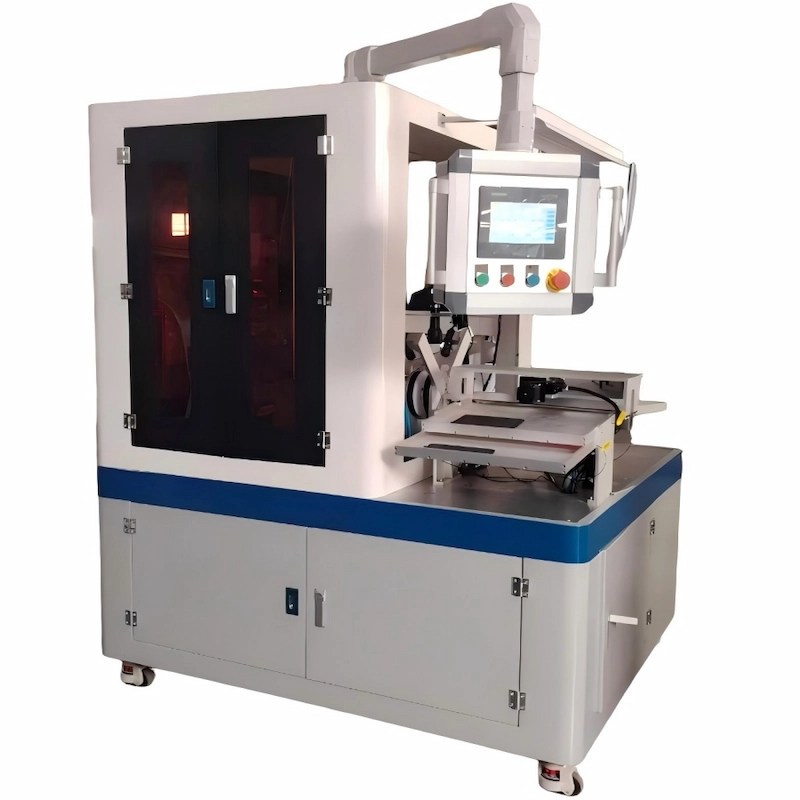
This is an Automated Vision Inspection machine used to inspect the surface of Automotive Screws.You can click on the image to see how it works.It is indeed faster and more accurate than manual check.
Automation and Integration Capabilities
Modern manufacturing increasingly relies on automation. When selecting equipment, it is important to consider how well it integrates with existing systems.
Inspection machines are usually easier to integrate into production lines, while testing machines may require dedicated space and infrastructure.
Data and Traceability
Data is becoming a key asset in manufacturing. Both inspection and testing machines generate valuable data that can be used for quality analysis, process optimization, and traceability.
Buyers should prioritize systems that offer robust data management and integration with MES or ERP systems.
Future Trends in Inspection and Testing Technologies
The future of quality control lies in intelligent automation. Technologies such as artificial intelligence, machine learning, and IoT are transforming both inspection and testing systems.
Smart inspection systems can now learn from data and improve accuracy over time. Similarly, advanced testing machines can simulate increasingly complex real-world conditions.
These innovations are making quality control more efficient, predictive, and data-driven.
Common Buyer Mistakes to Avoid
Many buyers make decisions based on incomplete information. Some common mistakes include:
- Confusing inspection with testing and choosing the wrong system
- Underestimating the importance of integration
- Ignoring long-term maintenance costs
- Failing to consider future scalability
Avoiding these pitfalls can save significant time and money.
Customization and Scalability
Every manufacturing process is unique, and off-the-shelf solutions may not always meet specific requirements.
Working with a supplier that offers customized solutions can significantly improve system performance. Scalability is also important, especially for growing businesses that plan to expand production capacity.Join Industrial a manufacturer of non-standard automation equipment for 13years. We have our own designers and workers. And can design and manufacture equipment according to your specific needs and requirements.It has gained widespread market recognition.
Supplier Selection and Technical Support
Choosing the right supplier is just as important as choosing the right equipment. A reliable supplier should offer:
- Strong engineering capabilities
- Proven industry experience
- Comprehensive after-sales support
- Customization options
Technical support and training are critical to ensure smooth operation and maximize the value of your investment.We have a comprehensive training process and provide technical support and timely after-sales consultation.
Conclusion: Building a Complete Quality Control Strategy
Inspection machines and testing machines are both essential components of modern manufacturing, but they serve different purposes. Inspection machines focus on detecting defects quickly and efficiently, while testing machines evaluate product performance and reliability.
From a buyer’s perspective, the key is to understand your production needs, evaluate your application scenarios, and work with a reliable supplier to develop a tailored solution.
Investing in the right combination of inspection and testing technologies will not only improve product quality but also enhance efficiency, reduce costs, and strengthen your competitive advantage in the market.
You can leave us a message or just contact me by what’s app (Sophia+8615562680658)to get your personalized solution.